

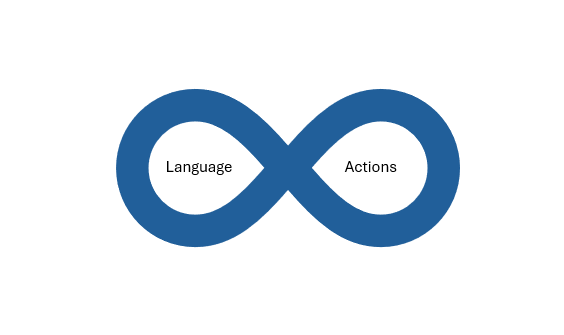
Effective orgs create an intentional mirror reflection:
where language accurately defines brand actions,
and the brand’s actions fully reinforce its sentiments.
It becomes a synchronized infinity loop.
This is the brand in action
long after the “branding” is done.
It is the cementing work of brand reputation.
Lived out, it trades like currency, a gateway to better:
Partnerships. Talent. Loyalty. Market share.
It becomes brand truth. Delivered.
But when your language and actions are out of sync,
when one side doesn’t accurately reflect the other,
the brand narrative becomes
A WORK OF FICTION.
That can be a repellent when people are seeking truth
and something they can believe in -- now more than ever.
When your chosen words lose their meaning and intent
Two questions we are not asking ourselves and taking seriously enough:
· What happens when our language choices lose their meaning?
· What’s at stake when we rely on vague or overused language?
As an outcome of our autopilot content creation, here’s that what I think happens: audiences gloss over it, they apply their own meaning or definition to worn-out words, or worse, they dismiss it — and you.
I believe this happens often, especially when we try too hard to sound smart rather than communicate clearly. And I say that as an audience member and a writer who must fight against autopilot smarts.
So I’ll ask – what does this business language say to you:
-- Innovation
-- Transformational
-- Brand
-- Speed / Acceleration
-- Strategy
-- Next
You’ll have definitions that differ from mine – and possibly your audience (I have three definitions for each – precise, generic and negative).
When people read these words in context of your content churn, expect that they will apply their definitions accordingly. I do, and I think you probably do, too.
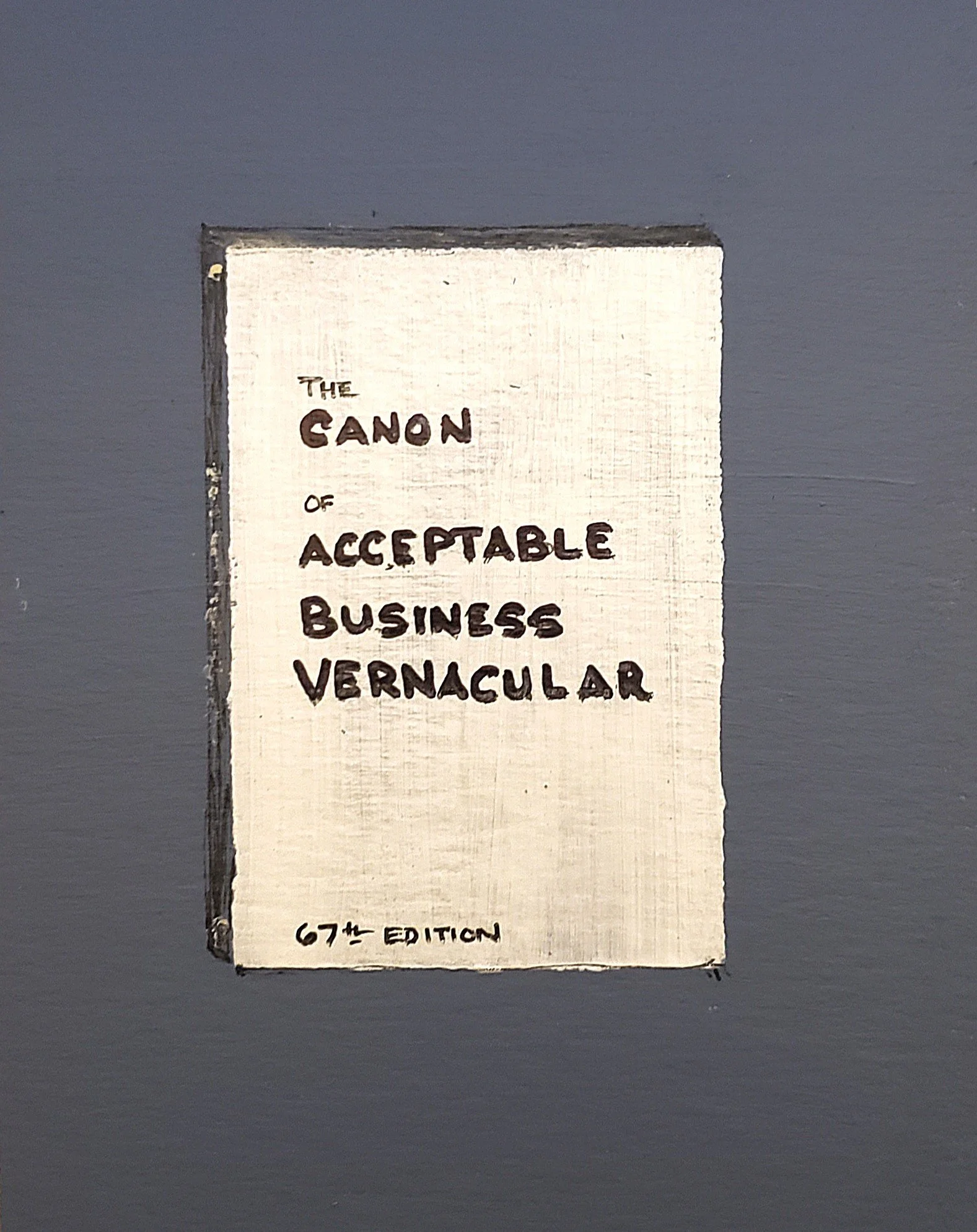
I put these once well-intended words into what I call The Canon of Acceptable Business Vernacular, language that is predictable, rudderless, highly overused and often intentionally vague — the opposite of what should be conveyed, of having distinction and uniqueness that everyone claims.
You know many of the Canon’s entries — formerly known as “buzzwords” at the height of their overuse. Eventually they cool down and become part of the Canon, awaiting resurrection from someone who doesn’t know quite what to say.
But the Canon doesn’t make you or your writing any smarter. Rather, audiences recognize it as business-speak void of the substance and clarity they crave.
And here’s the real danger:
When you turn to the Canon and expect it to do the heavy lifting, you forfeit clarity and meaning.
When you use the Canon's opaque words by default without testing, asking others and getting clear about what you mean, your words lose their value.
Standing out isn’t about fitting in with a vague vernacular and trying to look or sound the part. It’s about giving audiences a reason to believe because you left no doubt.
As I see it, we outsourced much of our thinking and language a long time ago by applying so-called “best practices” without asking critical questions about meaning and intent (unless, of course, the strategy is a cut-and-paste and hope-for-the-best approach, which is not a wise strategy and kinda feels like generative AI).
Sure, it’ll take some deeper thinking and iteration – which will require a bit more time – even as you "accelerate at speed toward the next brand innovation breakthrough that will transform lives." But that’s also the point.
Which brings me to this old trope: Mean what you say and say what you mean.
While you might find it cliché, you’ll do a lot worse if you choose to ignore its simple genius.
The most important part of writing isn't the writing

I question everything I write.
Until I don’t.
That doesn’t mean I believe my drafts evolve into perfection.
Truth is I haven’t come close to writing the perfect piece, ever.
But what I’ve managed to learn over a few decades of writing is this:
The most important part of writing
is questioning and thinking about
what you just wrote.
This is the writer’s contemplative work that demands unmerciful scrutiny:
Is this really what you mean?
Will it resonate with the audience?
Did you use a helpful example or accurate analogy?
Did you allow jargon to slip in?
Can you say this differently but better, quicker, more human and conversational?
Is it reflective of the brand or individual you’re writing for?
Would you want to read this?
Does it educate or challenge what you think?
Does it make you want to take action?
Here’s an accepted truth:
Anyone can write and putting words on paper or a screen is easy.
But not everyone is a writer – and that’s okay and also acceptable. Not everyone is an engineer either. Which is why it’s helpful for non-writers to understand how writers do what they do.
Writing (the process) doesn’t look like
writing (the act) at all.
Writing is rooted in everything that is simmering before the first words are hammered out, after the first draft – and second, third or seventh – or however many are required until you land on a draft worthy of being final.
Writing includes thinking, mulling, stewing, questioning, arguing with yourself, walking away and letting first words calcify, returning to test if they are strong or brittle, tearing elements down and rebuilding.
It looks more like sculpting than writing. That’s because it is art.
Writing also involves letting someone with zero subject matter expertise read your draft to find out if they can follow it, to see if it makes sense even if they don’t know the technical details. Because simplicity outperforms the bravado of expert posturing. Which is to say…
Good writing is hard.
It is never automatic, and never a given.
Writing something good, once, is in no way a guarantee that your next thing will be any good. It requires doing the hard work from scratch, all over again with no shortcuts, in hopes that it too might become good.
The myth of great ideas.
Great ideas (epiphanies!) rarely “just happen” in a first draft or any draft. It’s like the fleeing fireworks display in the sky – it’s looks pretty, briefly, followed by hazy residue once the twinkle fades as you await what comes next. Instead, great ideas are the tortoises in these races to the finish line, always plodding a bit slower than we’d like but worth it in the end.
In fact, epiphanies aren’t unexpected, out-of-the-blue thoughts or ideas at all. They emerge when you prune and edit everything that’s been taking up space – in your brain and on the page. In this sense, the epiphany becomes sudden, recognizable clarity as bloated language and jargon get removed.
The great idea emerges after carefully working and examining the entire landscape and finding it has been hiding in plain sight all along.
Good writing is never over.
However, at some point it needs to be ready or complete. Complete means as far as you can take it, as well as you possibly can, with what you know right now. Because a few weeks or months from now you’ll look at what you wrote and find yet another way, possibly a better way to say it (note: when this was first written, generative AI wasn’t near the concern, a crutch, an aide — however you choose to look at it — that it is today).
For people who don’t do a lot of writing, this takes entirely too long.
For writers, there’s always a desire for more time to allow the best ideas and language to emerge and mature. And that’s because writers know what’s at stake, writers know what the right words can unlock.
We’re seeing a lot of written content feels disposable, unhelpful, noisy [add your descriptor here]. Many want to call it slop.
It feels like fast food: quick, convenient, seemingly necessary, but also lacking. And just like fast food, disposable content feels even less fulfilling after its consumed.
It doesn’t have to be this way.
Even the shortest post can have a powerful impact.
The deception is in how easy it appears (but you know the truth).
Cut yourself some slack.
The process and the action are part of the iterative and final product.
Think it through (ask more Qs and then think some more).
And then write some really good sh*t.
** For the record, I wrote and edited this piece across multiple sittings, challenging myself and what I believe about the process. Nothing comes easy.
*** The photo image is the cover of Steven Pressfield’s book of the same title and is a must read for writers.
Your bespoke, game-changing copy is the problem

photo credit: Greg Rosenke
You lost me at… bespoke.
It's one of many words that, when pressed, organizations don't really mean or embrace.
Words that would rarely, if ever, come up during conversation, let alone a contract negotiation.
Yet there it is... part of the web copy, the pitch deck, and the promo ad.
Not everyone cares about your word choice.
(but some do)
Not everyone sees you borrowing from the competition's vernacular.
(relax, most people don't believe them either)
So keep this in mind:
There are few one-of-a-kind hand soaps or social services providers.
There are even fewer game-changing law practices or pumpkin patches.
And fewer still... bespoke agencies or pest exterminators.
Then ask:
What do we do well enough for the ideal customer or client to say, "We could benefit from that"? (we're not even aiming for uniqueness or greatness yet, just relatability to their needs)
If they have to look up bespoke or question your unverifiable claim, they’re likely seeking out the competition next to see if they speak plainly to their pain point.
Make it EASY for people to choose you.
And when it doubt, always simplify.
ON WRITING: The long, lonesome, and difficult road to meaningful connection

Writing is a “what-have-you-produced-for-me-lately” endeavor.
Last week’s words are gone, buried in the feed-heap and trash bin of email boxes.
And then come the daunting words like clockwork — “What’s next? Where’s your copy?”
For writers, churning out “content” in emails, blogs, and social posts, might not feel like meaningful writing, as too often it is a disposable byproduct of the craft. So little of what gets written has staying power beyond the moment.
It’s enough to make some writers feel as though their words don’t matter.
I know that feeling. I also know it’s a lie.
In all my years of writing for clients, only a tiny portion of my work still exists in its original form. Writing for business and brands has always been about the new and next idea. It’s about pivoting and evolving and the requisite attraction needed to validate those ideas. Writers have to accept and embrace this reality, especially in an age where anyone — or trained AI — can string together words and sentences.
Everyone has the capability to write.
Writers don’t have unique access to a special skill.
But that doesn’t make writing easy.
Committed writers also understand that:
Good writing is hard.
Good writing (and editing) takes time.
Good writing often goes unnoticed or underappreciated.
Good writing might even take years to reach its audience as intended.
Good writing has potential to change/improve/elevate anything and everything.
The book(s) that almost never happened
This week, a small book of tiny stories I wrote finally came to life. My publisher accepted the manuscript in 2018 – nearly 6 years ago. A series of unexpected events prevented it from arriving sooner.
But that’s nothing compared to some of the pieces inside the front and back cover. In fact, the first piece was published 19 years ago – in 2004 through a university-based literary journal.
But it wasn’t merely content that was created. These pieces were not about marketing an idea and expecting unrealistic book sales.
It was about plumbing the depths of the human condition. Something that wasn’t disposable (something that, perhaps drives book sales over time).
That is what every writer wants to create — for themselves and for you.
My encouragement / challenge for you
If you work with, manage, or hire writers on your team — I encourage you to validate them and their effort to craft carefully chosen words. Writing can be a lonely, isolating craft. Without constructive criticism and positive feedback, writers can wither (this is equally true for all creatives, any employee).
If you know a writer — ask to read their words (it will mean the world to them, even if you don’t love what they wrote).
If you are a writer — keep writing. As writers, we stick with it because we are compelled to write. With that compulsion, that drive to get better, to resonate, and to say something in a way that only you can say it is both a gift and privilege. Give it all the time it needs, which also includes the slow arrival of validation.
Luckily for me, someone took notice of my words.
I mean, really noticed.
Not just metrics, or page visits, or eyeballs, or likes.
They read it, absorbed it — and it resonated.
(hint: that’s the winning formula for brands, too).
The Fruit of Encouragement
My publisher said — "I like this. This is good. It deserves a wider audience." (Thank you, Gloria Mindock). She validated the work decades after I began leaning into this writing life.
Unbeknownst to her, those words of acceptance and validation energized more creative work to come.
Between acceptance and the arrival of This Side of Utopia this week, I’ve had two other small books published, drafted another, and have multiple concepts in the works.
That validation was like tapping a gushing well of creativity.
(BONUS: she even chose one of my paintings for the cover art)

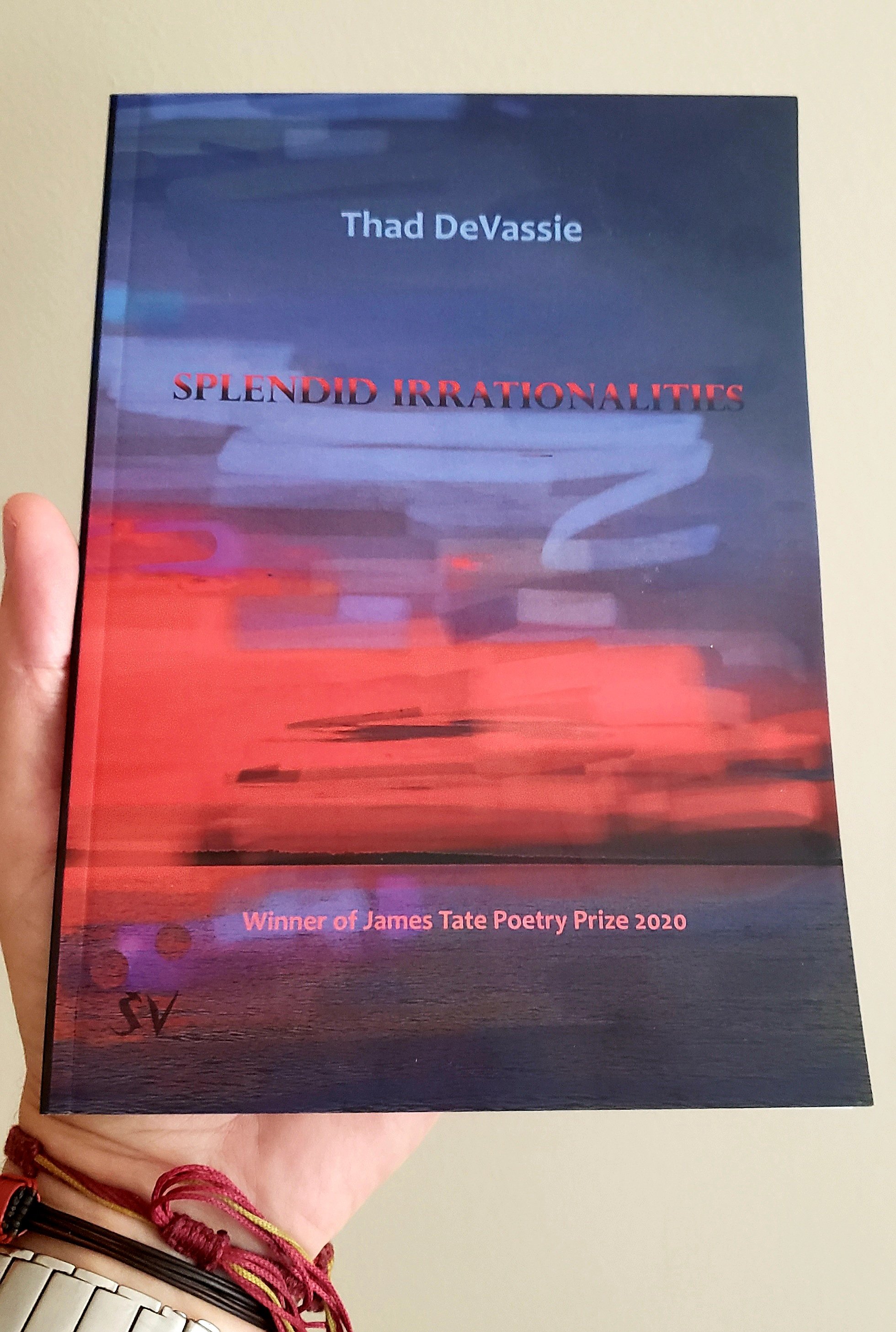
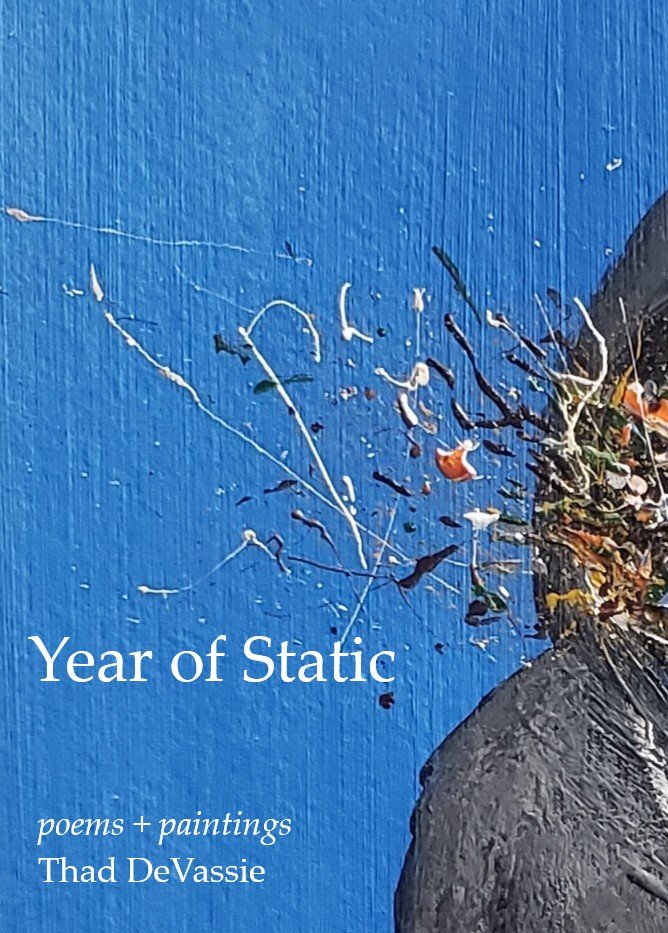
There’s a point where many writers are ready to give up — whether they’re working for brands or striving to get their words published by other means. And if their work is the kind of writing that simply pays the bills, their creative spark can fade to the point of simply churning more bland content to swim upstream toward a sea of sameness.
Without the encouragement to persevere, to play the long game, and to dig deeper…
too many great things go unwritten.
Chances are you have an exceptionally good writer in your orbit who is burning out, feeling hopeless, and wondering if their words matter.
Tell them that they do — and stick around to see what happens next (even if it takes a while).
***
And, if short, quirky stories* about navigating this life are your jam, you can find this little book online via Bookshop.org, Barnes & Noble, and Amazon. You can link to my writing/painting website to access each title.
*Yes, technically these are poems... written in accessible and understandable language in attempt to dispel what the modern reader thinks of poetry (e.g., poetry for people who don’t think they like poetry). In the age of shrinking attention spans, they just might be what's needed. Timing is everything.
Photo credit: Bethany Legg via unsplash