
Two questions we are not asking ourselves and taking seriously enough:
· What happens when our language choices lose their meaning?
· What’s at stake when we rely on vague or overused language?
As an outcome of our autopilot content creation, here’s that what I think happens: audiences gloss over it, they apply their own meaning or definition to worn-out words, or worse, they dismiss it — and you.
I believe this happens often, especially when we try too hard to sound smart rather than communicate clearly. And I say that as an audience member and a writer who must fight against autopilot smarts.
So I’ll ask – what does this business language say to you:
-- Innovation
-- Transformational
-- Brand
-- Speed / Acceleration
-- Strategy
-- Next
You’ll have definitions that differ from mine – and possibly your audience (I have three definitions for each – precise, generic and negative).
When people read these words in context of your content churn, expect that they will apply their definitions accordingly. I do, and I think you probably do, too.
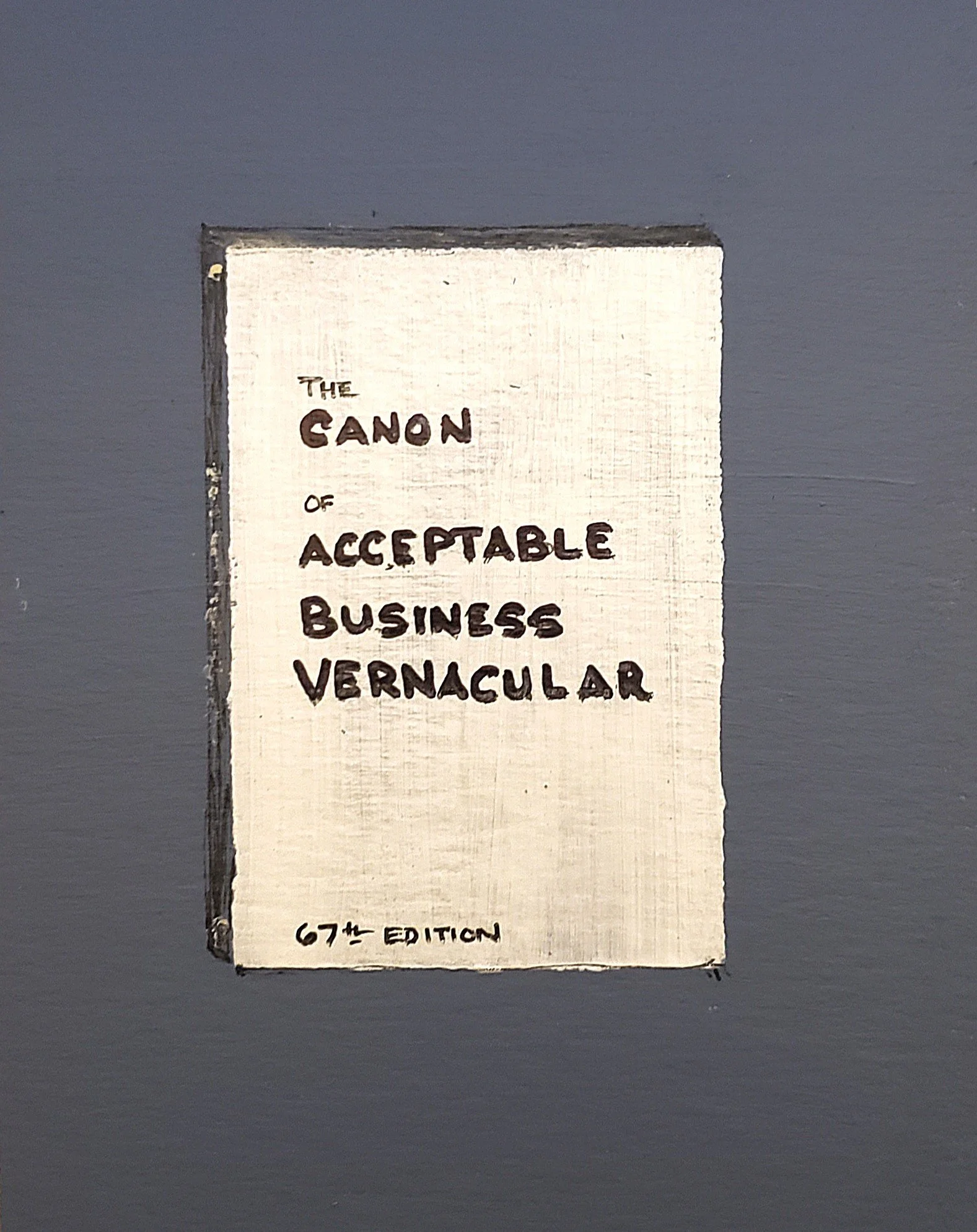
I put these once well-intended words into what I call The Canon of Acceptable Business Vernacular, language that is predictable, rudderless, highly overused and often intentionally vague — the opposite of what should be conveyed, of having distinction and uniqueness that everyone claims.
You know many of the Canon’s entries — formerly known as “buzzwords” at the height of their overuse. Eventually they cool down and become part of the Canon, awaiting resurrection from someone who doesn’t know quite what to say.
But the Canon doesn’t make you or your writing any smarter. Rather, audiences recognize it as business-speak void of the substance and clarity they crave.
And here’s the real danger:
When you turn to the Canon and expect it to do the heavy lifting, you forfeit clarity and meaning.
When you use the Canon's opaque words by default without testing, asking others and getting clear about what you mean, your words lose their value.
Standing out isn’t about fitting in with a vague vernacular and trying to look or sound the part. It’s about giving audiences a reason to believe because you left no doubt.
As I see it, we outsourced much of our thinking and language a long time ago by applying so-called “best practices” without asking critical questions about meaning and intent (unless, of course, the strategy is a cut-and-paste and hope-for-the-best approach, which is not a wise strategy and kinda feels like generative AI).
Sure, it’ll take some deeper thinking and iteration – which will require a bit more time – even as you "accelerate at speed toward the next brand innovation breakthrough that will transform lives." But that’s also the point.
Which brings me to this old trope: Mean what you say and say what you mean.
While you might find it cliché, you’ll do a lot worse if you choose to ignore its simple genius.