ON WRITING: The long, lonesome, and difficult road to meaningful connection

Writing is a “what-have-you-produced-for-me-lately” endeavor.

Last week’s words are gone, buried in the feed-heap and trash bin of email boxes.

And then come the daunting words like clockwork — “What’s next? Where’s your copy?”

For writers, churning out “content” in emails, blogs, and social posts, might not feel like meaningful writing, as too often it is a disposable byproduct of the craft. So little of what gets written has staying power beyond the moment.

It’s enough to make some writers feel as though their words don’t matter.

I know that feeling. I also know it’s a lie.

In all my years of writing for clients, only a tiny portion of my work still exists in its original form. Writing for business and brands has always been about the new and next idea. It’s about pivoting and evolving and the requisite attraction needed to validate those ideas. Writers have to accept and embrace this reality, especially in an age where anyone — or trained AI — can string together words and sentences.

Everyone has the capability to write.

Writers don’t have unique access to a special skill.

But that doesn’t make writing easy.

Committed writers also understand that:

  • Good writing is hard.

  • Good writing (and editing) takes time.

  • Good writing often goes unnoticed or underappreciated.

  • Good writing might even take years to reach its audience as intended.

  • Good writing has potential to change/improve/elevate anything and everything.

The book(s) that almost never happened

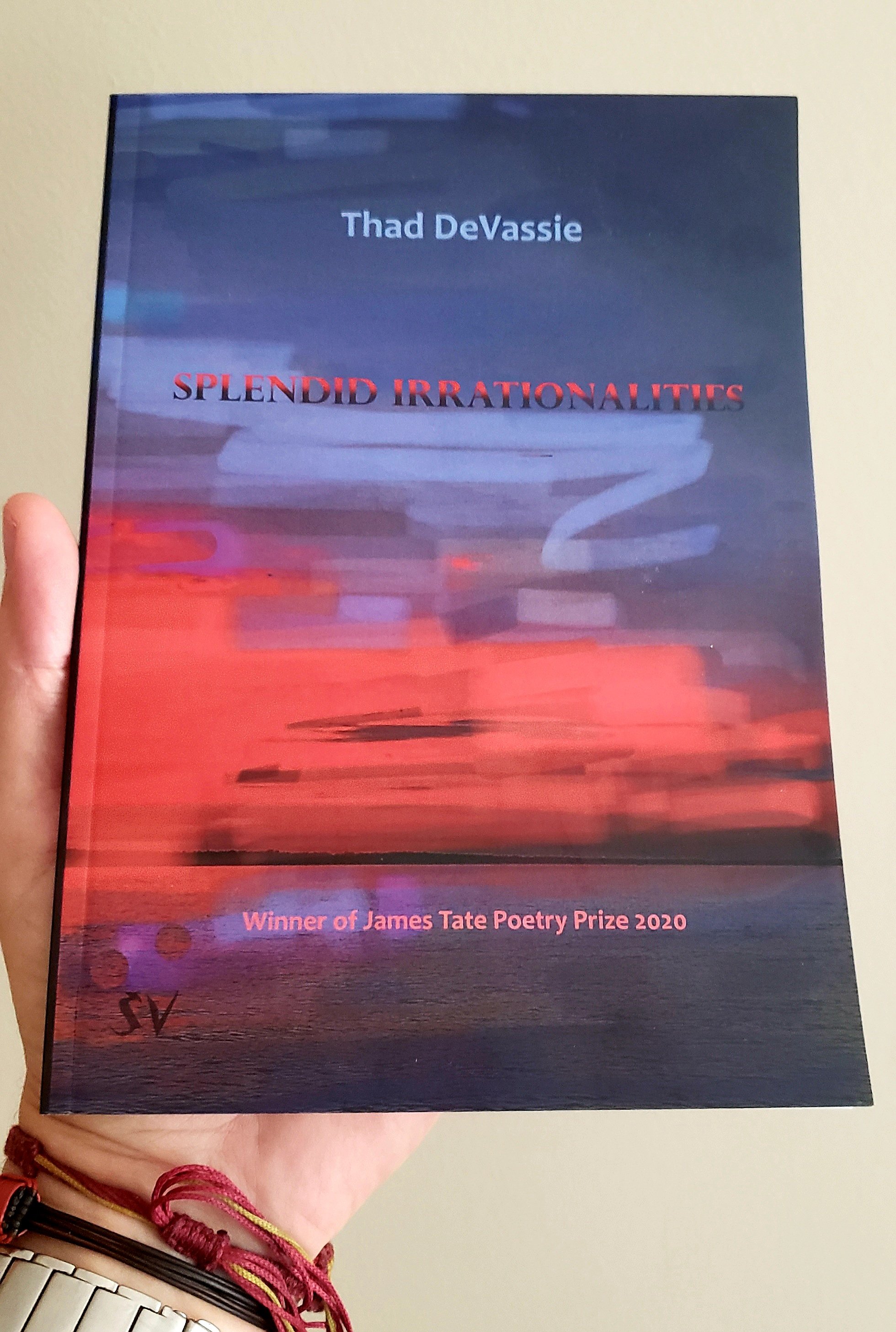
This week, a small book of tiny stories I wrote finally came to life. My publisher accepted the manuscript in 2018 – nearly 6 years ago. A series of unexpected events prevented it from arriving sooner.

But that’s nothing compared to some of the pieces inside the front and back cover. In fact, the first piece was published 19 years ago – in 2004 through a university-based literary journal.

But it wasn’t merely content that was created. These pieces were not about marketing an idea and expecting unrealistic book sales.

It was about plumbing the depths of the human condition. Something that wasn’t disposable (something that, perhaps drives book sales over time).

That is what every writer wants to create — for themselves and for you.

My encouragement / challenge for you

If you work with, manage, or hire writers on your team — I encourage you to validate them and their effort to craft carefully chosen words. Writing can be a lonely, isolating craft. Without constructive criticism and positive feedback, writers can wither (this is equally true for all creatives, any employee).

If you know a writer — ask to read their words (it will mean the world to them, even if you don’t love what they wrote).

If you are a writer — keep writing. As writers, we stick with it because we are compelled to write. With that compulsion, that drive to get better, to resonate, and to say something in a way that only you can say it is both a gift and privilege. Give it all the time it needs, which also includes the slow arrival of validation.


Luckily for me, someone took notice of my words.

I mean, really noticed.

Not just metrics, or page visits, or eyeballs, or likes.

They read it, absorbed it — and it resonated.

(hint: that’s the winning formula for brands, too).

The Fruit of Encouragement

My publisher said — "I like this. This is good. It deserves a wider audience." (Thank you, Gloria Mindock). She validated the work decades after I began leaning into this writing life.

Unbeknownst to her, those words of acceptance and validation energized more creative work to come.

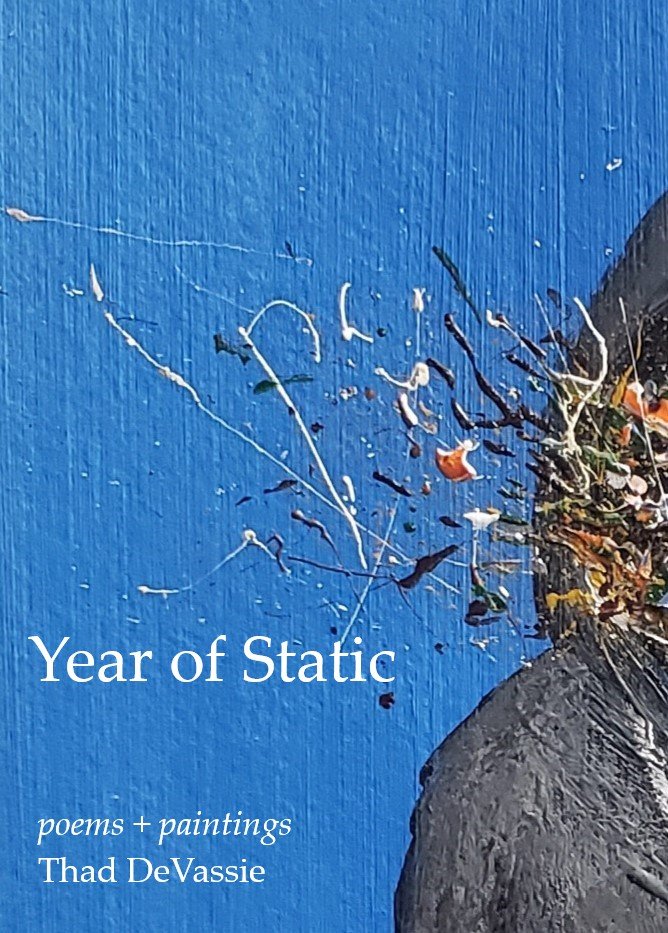
Between acceptance and the arrival of This Side of Utopia this week, I’ve had two other small books published, drafted another, and have multiple concepts in the works.

That validation was like tapping a gushing well of creativity.

(BONUS: she even chose one of my paintings for the cover art)

There’s a point where many writers are ready to give up — whether they’re working for brands or striving to get their words published by other means. And if their work is the kind of writing that simply pays the bills, their creative spark can fade to the point of simply churning more bland content to swim upstream toward a sea of sameness.

Without the encouragement to persevere, to play the long game, and to dig deeper…

too many great things go unwritten.

Chances are you have an exceptionally good writer in your orbit who is burning out, feeling hopeless, and wondering if their words matter.

Tell them that they do — and stick around to see what happens next (even if it takes a while).

***


And, if short, quirky stories* about navigating this life are your jam, you can find this little book online via Bookshop.org, Barnes & Noble, and Amazon. You can link to my writing/painting website to access each title.

*Yes, technically these are poems... written in accessible and understandable language in attempt to dispel what the modern reader thinks of poetry (e.g., poetry for people who don’t think they like poetry). In the age of shrinking attention spans, they just might be what's needed. Timing is everything.

Photo credit: Bethany Legg via unsplash
There Is No Escaping the Deadline

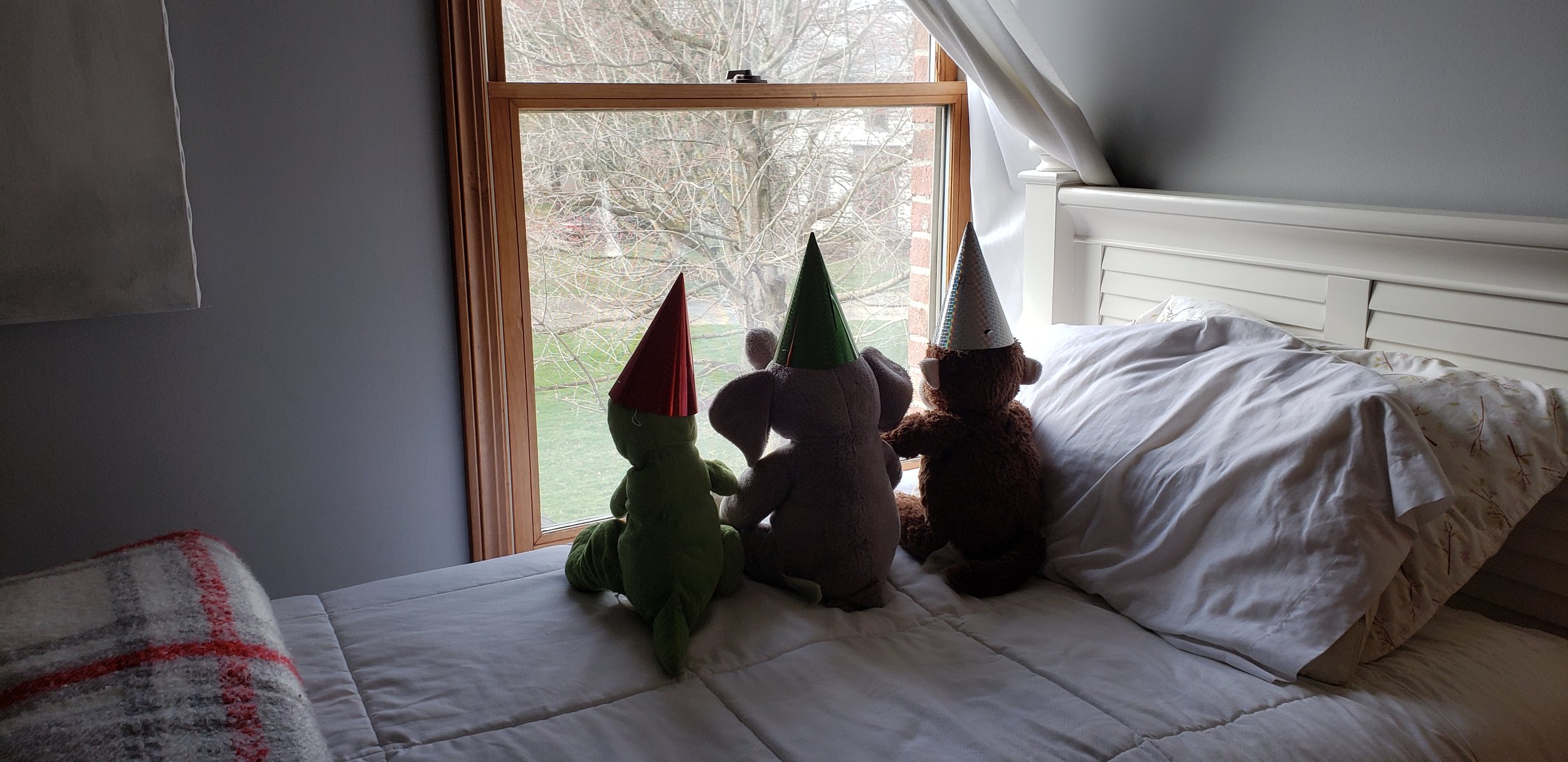
Three “old friends” who anxiously await her return. Not pictured: Dad with a party hat.

The deadline for an 18-year project arrived today.

At times, the work felt impossible. It felt like it might never end. I sensed on too many occasions I was wildly out of my league and unskilled to do this work. And often I believed that I alone might be fully responsible for ruining the project – did I overwork it? Underwork it? Neglect critical parts?

But as the deadline neared, all I craved was more time. Time to pour just a little more into it. Time in hopes that the impact would be undeniable.

Sound familiar?

Deadlines exist for a reason. At some point we have no choice but to ship our work.

But this isn’t any ordinary project.
And this so-called project isn’t a project at all.

This is about my only daughter, and all the love and nurturing and parenting and choosing your battles wisely in hopes of getting her right here, at the edge of the nest, and wondering if a nudge will be necessary or if she will spread her wings to fly on her own and bring this chapter to a close.  

I tell you, the college drop-off itself isn’t hard. It’s rather beautiful in its awkward messiness and exciting preparation for new life experiences.

But leaving campus without that little girl in the backseat? That’s the part that guts you.

This is our life’s work: the relational, the pouring into, the molding, the listening, guiding, coaching, and even getting out of the way – in hopes the job isn’t over, not for a long shot.

And we’re all on deadline whether we choose to accept it or not.

Yes, deadlines (often) matter. Yes, it’s our job to meet them. So we must give our full effort, ship our work, and hope for the best — and that rings true of our kids, whether going to 1st grade or off to college.

Sometimes we get a front-row seat to success we didn’t expect. A lot of the time we just become perpetual learners ourselves.

We could all do better about prioritizing our relational work. We don’t always have the knowledge of, or get clear reminders about the relational deadlines.

Thankfully, I have another 18-year project that I still get to work on. Which is why I need to remind myself: Keep leaning in and showing up. After all, this is your life’s most meaningful work... and the deadline is coming.  

Everyone wants creativity & innovation; few have the required patience

Photo credit: Duane Mendes via unsplash

I read a sponsored headline on LinkedIn recently that said – The Opposite of Inconvenience Is Innovation.

(Not quite true and it resonates as an AI headline, but I’ll withhold judgment).


Then you had to “unlock” their gated, six-carousel slide deck to understand their point.

To that I’d say: unlocking gated material on LinkedIn is the opposite of convenient.


Fellow creative and copywriter Mike Roe recently shared an article on the death of creativity. I was drawn to a particular claim about the near-uselessness of three-fourths of the brands paraded in front of us, and how we wouldn’t miss them if they disappeared.

Think about that: the vast majority of companies/brands are easily forgotten, including yours.

The premise here is that we’ve killed creativity — meaning we aren’t creating anything memorable — in lieu of being efficient with time and speed at the lowest possible cost.

That, friends, is how we end up with headlines and campaigns promoting products like the one above. And it is also how they falter because they fail to entice, and in turn expect something from us long before earning our trust.


What might’ve enticed me to open this sponsored campaign and discover their offering? Simple:

1.       Don’t lock your content on LinkedIn (be generous, be a thought sharer)

2.       Entice us with stories/snippets that will resonate, something like…


Opportunities are created more than they are granted.

Your team keeps looking for opportunities, but when was the last time you granted them time to create something that turned heads? Got people talking? Shook the industry?

Here’s the rub: creating takes time. This can feel wildly inconvenient. It is far from instantaneous. But it is worth it. Just ask the computer maker not named Dell, or Gateway, or Compaq, who put a jukebox in the palm of your hand, and gave you a phone that still functioned like a phone, but became your essential life assistant.

Innovation isn’t doing what you know how to do a little differently. That’s called chasing the market leader. And, whoa, talk about inconvenient.

Remember — you have a choice: to either keep looking for opportunities — or start creating them.


To be fair, maybe this was the same kind of sponsored content the company gated, offering me to dive deeper into their offering, their own unique solution.

But I’ll never know – because I wasn’t compelled to look.


Think of it this way:

How many times has your audience been dismissive or not compelled to look because the creative was rushed, roadblocks to engagement we intentionally set for the sake of data, and meeting the artificial deadline prevailed over doing the best possible work with a better chance of resonating? Have any of us ever been guilty of such a thing?


When we rush creativity (the very thing that leads to innovative ideas) we take away the power of its potential.

We’ve been conditioned to “box it up” and promise what it will do in terms of metrics, sales, and how it measures up on spreadsheet – literally putting it in a box. When we do this, we have succumbed to the antithesis of creativity. Everything begins to look the same. No wonder three-fourths of brands are forgettable.

We neuter creativity before it has a chance do its intended thing – which is to wow people, stop them in their tracks, and get them talking.


And yet that is precisely what every company says it’s pursuing, but typically with poor copy that falls on deaf ears.


Before I Forget — Things I've Learned from My Mother's Dementia

Pay attention to the list (photo credit: Glenn Carstens-Peters)

I am not particularly good at making lists. I know what needs to get done and when, and only when the world feels like too much to handle do I feel compelled to write things down in checklist form. It’s a bit strange considering I write just about everything else down that comes to mind as a writer and creative.

But I’m going to strongly advocate for this list.

It’s one of the few that I have penned. I’m sure there are similar lists out there, but this one is mine. It’s well-worn and lived in.

And I’m sharing it because I think you can benefit from it – even if a loved one isn’t ill or disappearing in front of your eyes. It’s a different kind of list, one that doesn’t bring the kind of joy and satisfaction from checking the box. Each time I am reminded to turn to it, I think of the Avett Brothers Murder in the City where brothers Scott and Seth sing these final lines:  


If I get murdered in the city
Go read the letter in my desk
Don't bother with all my belongings
But pay attention to the list

Make sure my sister knows I loved her
Make sure my mother knows the same
Always remember there was nothing worth sharing
Like the love that let us share our name
Always remember there was nothing worth sharing
Like the love that let us share our name


And with that, pay attention to the list.


1.      Life moves slowly, often predictably; then it changes all at once. Recognize this as the rule rather than the exception. You’re not being singled out.

2.      Being right doesn’t matter. Showing love does. 

3.      Show up.

4.      After you’ve taken it personally, don’t take it personally.

5.      Listen. There’s a story to decode underneath the misidentified people and places. There’s a memory trying to rise to the surface.

6.      Ask for stories. Write them down. History is fading before your eyes. 

7.      Grief is not an event. It is a series of high and low tides that never cease.

8.      Costume jewelry can save a lot of heartache.

9.      Watch the film Alive Inside and see how playing music awakens the brain, reaches that far off part that remains uncorrupted. Tap the well that appears to be empty.

10.  Hide-n-seek is not only a kid’s game. Approach what’s missing with a kid-like curiosity and desire to find.

11.  Give compliments. Tell her she looks beautiful, how she reminds you of a special time.  

12.  Enjoy the silence. Sometimes presence is enough.

13.  Take walks. Slow is still active.

14.  Pull photographs before the funeral home asks. They are memory triggers for conversation, not just a five-minute carousel of a life lived.    

15.  She’s your parent, but his spouse. Same person, different interpretations. Remember and respect it as they would want you to do.

16.  Let her eat what she wants to eat. We’re no longer staving off anything.   

17.  Ask often: what really matters at this moment?

18.  Denial: don’t let it be the disease you suffer from.

19.  Making up for lost time, lost ground, lost arguments is unachievable. Making the most of the moment is achievable.

20.  Become an advocate for their health and well-being. This is as important with family members as it is with physicians.

21.  You are of little good to others if you are not taking care of yourself.

22.  This isn’t forever.

23. Find community. Grieve together. Lift each other up. Keep walking forward.

24.  This is a list for dementia, for Alzheimer’s. But don’t let that stop you from using the list. 


Short attention spans, content deficits, and disconnects

You have 1.3 seconds.

One. point. three.


That’s the length of Gen Z’s attention span according to a new global study.

The good news is you’ll get a few seconds more with older generations.


To clarify, this is about active attention spans regarding advertising.

But advertising is a form of messaging. A sliver of storytelling.

And it either grabs one’s attention or it doesn’t. It’s memorable or it’s not.


This is an age-old challenge for advertisers and marketers: How to grab that fast-fleeting attention for a few seconds. And then a few more. The stakes have been raised and there is pressure-cooked dilemma of attention deficit driven by social media scrolling.


But don’t worry. Your marketing team will creatively crack the code.

You’ve got bigger fish to fry. Like answering this question:


What will we say once we have their attention?


More than two decades of asking company leaders what they do, why they do it, why people should choose their product/service – and then asking their people the same question – and it’s pretty clear most orgs don’t have clear-cut answers.

Vague ones? Yes.

Succinct and consistent? Rarely.


1.3 seconds of cool may be just that — cool.

What it cannot do is convey your complex message, even when distilled to something simple.


However, creativity can point to your story that connects emotionally to an audience.


Of course you know your story, right?

The one your team knows inside and out?

That conveys your unique value and what you bring to the market?

That underscores why people – employees and customers alike – are all in on what you do?

Yes? Vaguely?


This takes more than 1.3 seconds.

So breathe.

And let your creative team be creative when it comes to grabbing attention.

Don’t let an audience attention deficit lead your business into a content deficit.

You still need to nail your story. Know your why. Clarify what makes you worth their time.

Remember that old-school metric about how an audience needs to see/hear your message nine times for before truly acknowledging it for the first time?

The same is true in a generation of scrollers.

Except today it’s going to take a lot more than nine times.


But once you grab their attention, it’s game on.

To keep their attention you need to make a meaningful connection.

And in case you need reminded, that is why your company exists in the first place.